


PRIMATE CARE PROJECT
Helping Primates Live Safer, Healthier, More Enriched Lives—and Truly Thrive While in Human Care.
Our approach is practical, nonjudgmental, and primate-first. Primate ownership is a reality. While we do not promote it, we choose to meet that reality with education, support, better care, and a primate-first approach—because the wellbeing of the primate comes first.
The Primate Care Project is built around learning, teaching, and sharing practical ways to improve primate welfare—from nutrition, enrichment, housing, training, behavior, and communication to emergency preparedness, responsible ownership, and preventing neglect and abuse.
We meet people where they are, regardless of their background or what may have happened in the past. When a primate can safely remain in human care, our focus is helping the caretaker improve conditions, make informed decisions, prepare for challenges, and give that primate the best opportunity to live a healthy, enriched, well-adjusted life.
We also want people to feel safe asking for help when a situation is no longer working. When surrender is the safest option, our priority is getting the primate out of an unsafe or inadequate situation and connected with appropriate care—not punishing or shaming someone for coming forward.
We continue learning alongside the people we help with one goal: primates who are not simply living in human care, but truly thriving while in captivity.
LYNN PLEASE MAKE Button: Support the Work Behind Them
(jump directly to our giving options section)
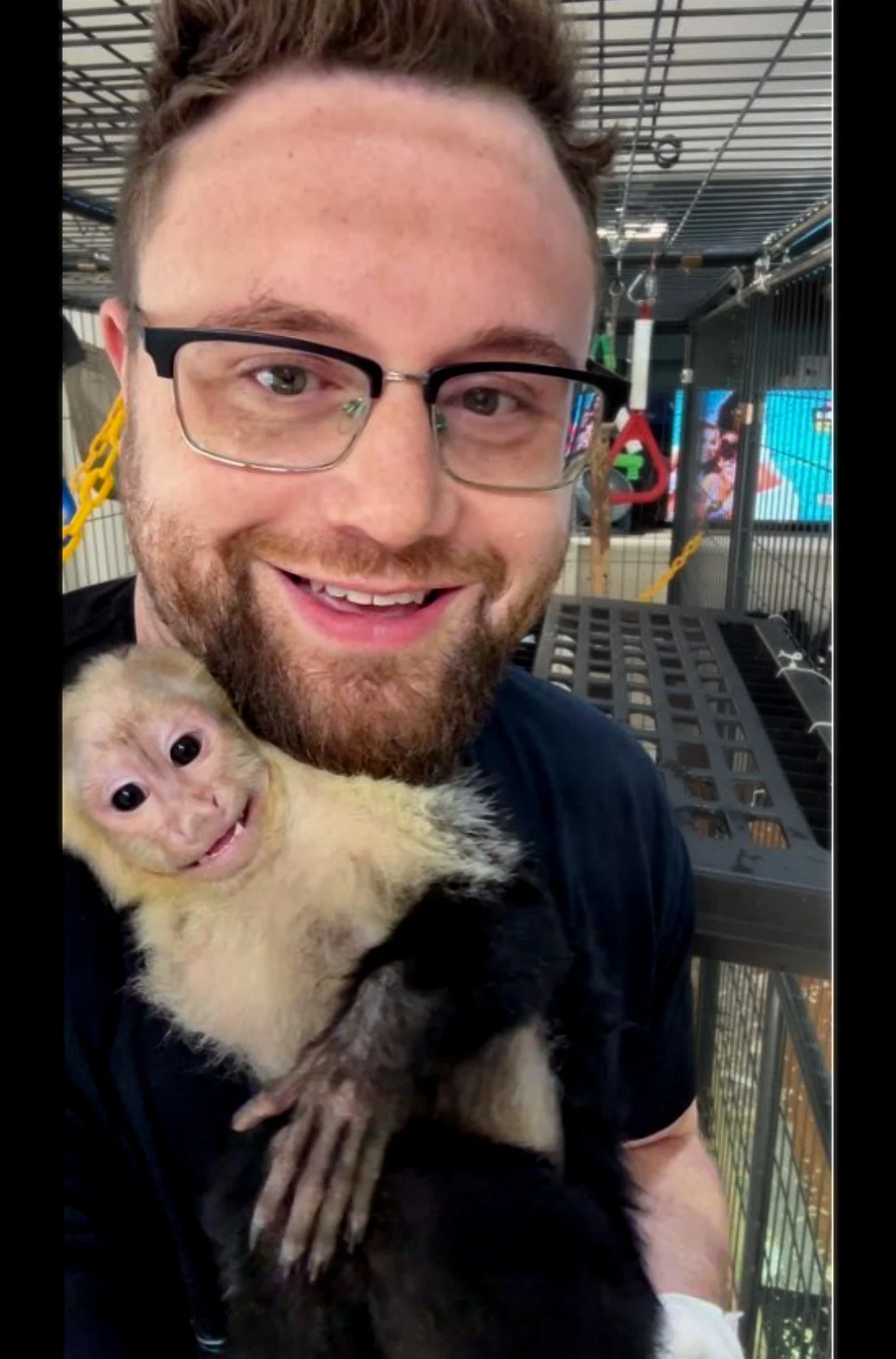
Before & After Someone Gets a Monkey
Social media often shows the cute moments. It rarely shows the lifelong responsibility that comes with caring for a primate.
Before someone gets a primate, we want to help them understand what that commitment really requires: lifespan, cost, housing and space, nutrition, enrichment, social and behavioral needs, sexual maturity, biting and aggression, veterinary access, legal requirements, travel limitations, emergency care, backup caregivers, and long-term planning. Sometimes the best support we can provide is helping someone recognize that a primate may not be right for them.
When a primate is already in human care, our priority is helping that primate live the best life possible. We meet caretakers where they are, work through challenges with them, and provide practical education and support around nutrition, lighting, housing, enrichment, behavior and communication, positive-reinforcement training, social needs, veterinary preparation, emergency planning, and other species-specific needs.
We are here to help, not shame. If something needs improvement, we want people to feel comfortable asking questions, learning, and working with us to make it better. We will meet you where you are and help you move forward—but the primate's health, safety, and essential needs must always come first.
At minimum, if nothing else, please take the time to read The Misunderstood Primate by Jessica Snow, available on Amazon, or join her DogsToMonkeys Patreon. These are among the limited primate-specific care and training resources available directly to the public and can provide an important foundation for better understanding and caring for the primate already depending on you.
WHAT YOUR CONTRIBUTION ACTUALLY SUPPORTS
Your gift improves the lives of primates far and wide!
Support helps us develop and share:
Primate welfare, nutrition, enrichment, and enclosure resources
Behavior, communication, and positive-training education
Ownership-readiness and responsible-care guides
Emergency and veterinary-preparedness resources
Monkey-scam prevention education
Abuse and neglect prevention resources
Anti-trafficking and illegal wildlife trade education
Online primate-abuse awareness and reporting resources
Educational videos, guides, and practical tools
One resource can help many primates. An ownership-readiness guide can prevent the wrong acquisition, or at least better prepare those who ignore all the red-flags, and go through with it anyway. A scam guide can an prevent unnecessary theft. Better enrichment, nutrition, or behavior education can improve a primate's daily life. Emergency preparation can change what happens during a crisis.
The goal is simple: reach more people with better information, help more caretakers provide better care, and give more primates the opportunity to live safer, healthier, enriched lives, where they can truly thrive.
LYNN PLEASE MAKE Button: Protect Nature Through PayPal
(jumps directly to www.paypal.me/cecdfw)
LYNN PLEASE MAKE Button: Other Ways to Defend Nature Together
(jumps directly to our “How You can help” giving page, where they can choose other ways to give such as DAF, check, goods/supplies, corporate/in-kind support, etc)
Preventing Abuse, Neglect, Illegal Trafficking, & Scams.
The problems surrounding private primate ownership go far beyond how a monkey is cared for once it reaches someone's home.
Neglect, abuse, poaching, wildlife trafficking, and scams are all part of a larger problem we work to address.
People looking for a monkey online are frequently targeted by fake sellers using stolen photos and videos, fraudulent websites, fake permits and veterinary documents, false shipping or transport fees, pressure tactics, and repeated demands for money. We provide practical information to help people recognize scams, verify who they are dealing with, avoid losing money, and avoid supporting questionable or illegal animal trade.
We also work to identify, expose, report, and help stop primate neglect, exploitation, trafficking, and online abuse. This includes helping people recognize abusive content, preserve and report relevant information, report accounts and content to platforms, and connect serious concerns with organizations or authorities positioned to act.
Just as importantly, we want people to ask for help before a bad situation becomes worse. If someone is struggling to properly care for a primate, we would rather help them improve that animal's care than shame them into silence. If surrender becomes necessary, our priority is getting the primate safely out of an inadequate or unsafe situation and into appropriate care—not judging someone for asking for help.
Prevent the wrong acquisition when we can. Improve care when a primate is already there. Intervene when a primate is suffering. Help provide a safe way out when the situation cannot continue. The primate comes first.